I hear this from business owners surprisingly often.
But when I look beneath the surface, marketing itself is rarely the real problem. Usually, the business has tried a collection of marketing activities without the strategic direction, leadership or supporting infrastructure required to make them work.
The activity happened. The results didn’t. And marketing got the blame.
Most marketing tactics CAN work... Websites work. Email works. LinkedIn works. Events work. Advertising works. Content marketing works. But none of them works in isolation simply because money, time and effort have been invested.
Before choosing a channel or launching a campaign, a business needs to answer some fundamental questions:
If those questions have not been answered, marketing becomes a series of guesses.
Over many years, I’ve worked with hundreds of businesses across manufacturing, healthcare, professional services and other complex B2B sectors including insurance, construction, finance and others.
While every business is different, the same three problems appear again and again.
Marketing often becomes reactive. Sales slow down, so advertising is launched. The website starts looking dated, so it is redesigned. A competitor becomes active on LinkedIn, so someone decides the business should post more frequently.
There may be plenty of activity, but there is no clear sequence connecting the business goals, priority customers, competitive position, message, channels and sales process. Without that roadmap, even good work can become expensive noise.
A business may have an internal coordinator, several agencies and a collection of capable specialists - yet nobody is leading the whole marketing function.
Everyone may be doing their job, but who is deciding whether all those efforts are working together and contributing to the company’s growth priorities?
Marketing needs someone looking across the entire commercial picture: working with the business owner or Management team - setting priorities, challenging assumptions, coordinating resources and ensuring execution stays connected to business outcomes.
Too many marketing reports stop at impressions, followers, clicks and website traffic. Those numbers can be useful, but they are not business outcomes.
The real questions are harder:
Marketing that cannot demonstrate a relationship to growth will eventually be treated as a cost and rightly so.
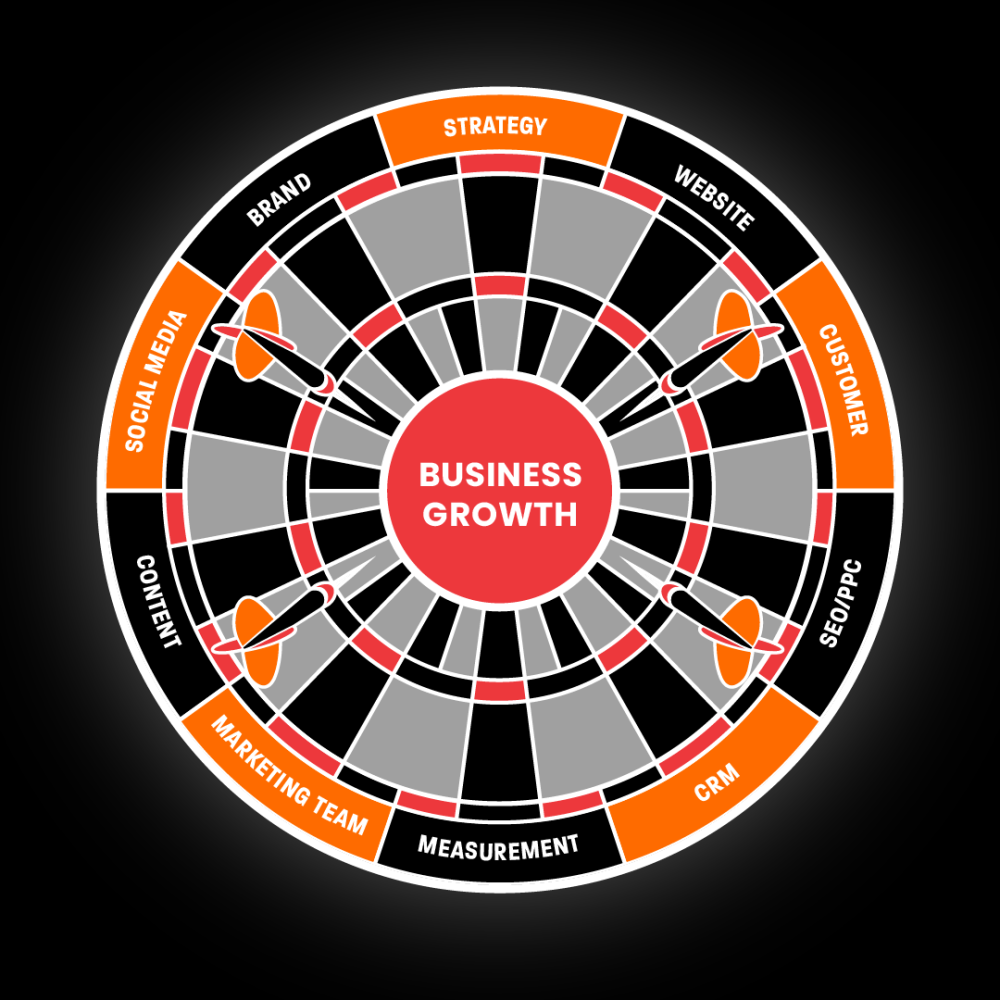
Effective marketing is not one campaign, one channel or one clever idea. It is a connected system. If one or more of those foundations is missing, adding more activity rarely solves the problem. It often just increases waste, confusion and trust.
Business goals → Customer insight → Competitive advantage → Positioning → Messaging → Channel strategy → Execution → Measurement
Ask whether the business has given it what it needs to succeed.
And is anyone measuring the results that actually matter?
These are just some of the areas covered in BEAM Marketing’s
20 Marketing Essentials for Business Growth eGuide.
It’s designed to help business owners and management step back from the day-to-day activity and assess whether the fundamentals are genuinely in place - from strategy, brand and competitive advantage through to content, CRM, automation, customer experience, measurement and budget.
Because the answer is rarely to simply “do more marketing.” The answer is to build a stronger marketing system - one that is strategically directed, properly led and commercially accountable.
Before you write marketing off, find out what is actually missing.
Want to uncover your main marketing challenges and discover how to bridge the gap to your business goals? Book your
FREE 60-minute Growth Accelerator Assessment with Natalie Potter
Natalie is a exceptional Marketing leader who operates as a Fractional Chief Marketing Officer or Lead Consultant for several SME businesses across various industries including manufacturing, healthcare/medical and professional services.

Start here:
Email : natalie@beammarketing.au
When you truly know your customer, growth stops being guesswork.